Tel: +255 762 161 168

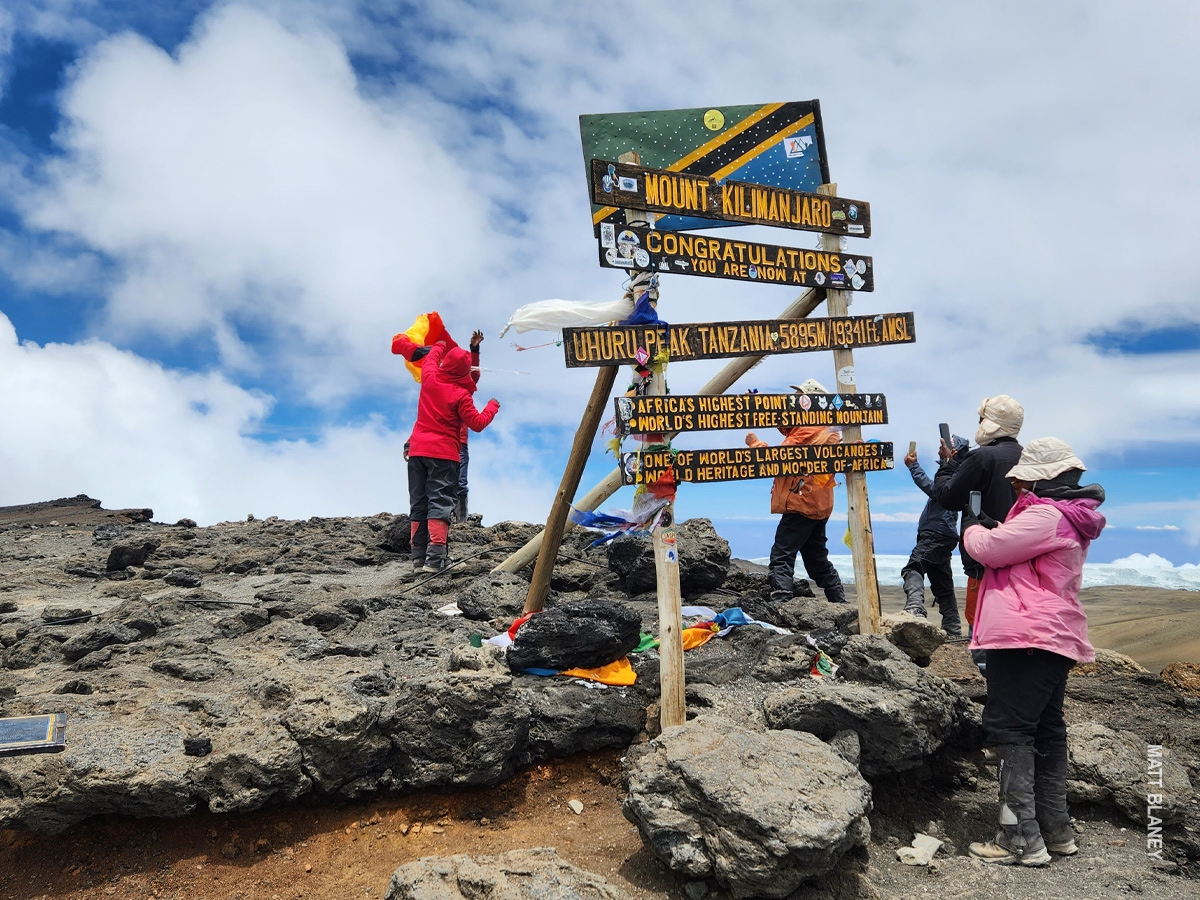
Rising majestically above the northern Tanzanian savannas, Mount Kilimanjaro National Park is a landscape of unparalleled beauty and adventure. At its center soars Mount Kilimanjaro, Africa’s highest peak at 5,895 meters (19,341 feet), attracting adventurers, photographers, naturalists, and cultural travelers from across the globe. Covering 1,688 square kilometers of ecological diversity, geological wonder, and cultural heritage, the park is a world-class destination for trekking, wildlife observation, and eco-tourism.
At Above and Beyond Photographic Tours & Safaris, we craft journeys that capture the full spectrum of Kilimanjaro’s environments. From the lush, bird-filled rainforests of the lower slopes to the stark, icy summit where the horizon stretches endlessly, every expedition is both physically challenging and profoundly rewarding. Kilimanjaro’s vertical landscape presents a rare ecological staircase, offering tropical, temperate, and arctic conditions within a single climb, an unparalleled experience for photographers and nature enthusiasts alike.
History and Cultural Significance
Mount Kilimanjaro has long been revered as sacred by the Chagga people, whose communities cultivate the fertile lower slopes using the mountain’s volcanic soil and glacial meltwaters for coffee, bananas, and other crops. The mountain’s spiritual and cultural significance continues to shape local traditions.
Officially gazetted as a national park in 1973, Kilimanjaro was recognized by UNESCO as a World Heritage Site in 1987 for its ecological, geological, and cultural importance. Today, conservation initiatives focus on protecting its iconic glaciers, high-altitude ecosystems, and forested watersheds that sustain millions of people in the surrounding region.
Above and Beyond Photographic Tours & Safaris actively supports these conservation efforts through responsible trekking, educational briefings, and community engagement.
Geography and Ecological Zones
Kilimanjaro’s vertical terrain forms distinct ecological zones:
Montane Rainforest Zone (1,600–2,800 m)
Heather and Moorland Zone (2,800–4,000 m)
Alpine Desert Zone (4,000–5,000 m)
Arctic Summit Zone (5,000–5,895 m)
How to Reach Mount Kilimanjaro
By Air
From Airport to Park
By Road
Above and Beyond Photographic Tours & Safaris ensures smooth transfers from arrival to base camp, providing time to acclimatize and prepare for your trek.
Wildlife and Ecology
While Kilimanjaro is famed for trekking, its lower slopes harbor impressive biodiversity:
Mammals:
Birdlife:
Flora:
These habitats provide photographers and nature enthusiasts with a living laboratory of flora and fauna unique to each altitude.
Key Attractions and Highlights
Uhuru Peak
Glaciers and Ice Fields
Chagga Villages and Cultural Landscapes
Activities Offered
Trekking and Mountaineering
Nature Walks
Cultural Excursions
Eco-tourism and Environmental Learning
Practical Visitor Information
Why Choose Mount Kilimanjaro National Park
Mount Kilimanjaro National Park offers a combination of physical challenge, ecological diversity, and cultural immersion unmatched anywhere in the world. Trekkers experience climates from tropical warmth to arctic cold, encounter unique wildlife, and traverse landscapes shaped by millennia of geological activity.
With Above and Beyond Photographic Tours & Safaris, every expedition is crafted to ensure safety, educational enrichment, environmental responsibility, and cultural engagement. From the first step on the rainforest trail to the triumphant summit at Uhuru Peak, your journey is designed to be both transformative and unforgettable.
Mount Kilimanjaro is more than a climb, it is a photographic, ecological, and cultural masterpiece waiting to be explored with expertise, passion, and precision.


Tel: +255 762 161 168
sales@uniquetanzaniavoyages.com
info@uniquetanzaniavoyages.com