Tel: +255 762 161 168

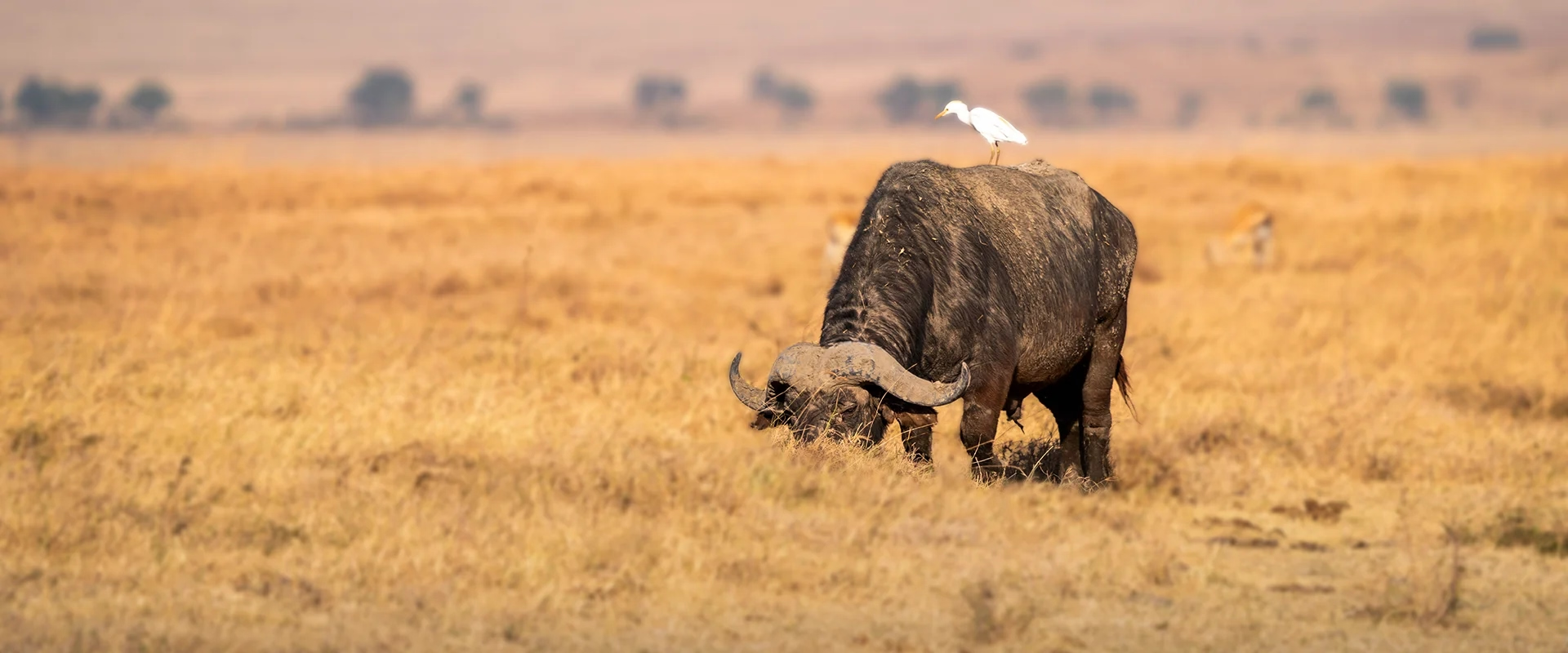
In the far reaches of southern Tanzania lies a landscape that remains almost untouched by time. Ruaha National Park is a colossal expanse of raw wilderness where silence stretches across vast horizons and wildlife continues to move along ancient, uninterrupted corridors. Covering more than 20,000 square kilometers, Ruaha is Tanzania’s largest national park and one of Africa’s final strongholds of true, unfiltered wilderness.
Here, rugged escarpments, sweeping savannas, and towering baobab trees form a dramatic stage for one of the continent’s most powerful wildlife spectacles. The sheer scale of Ruaha humbles even the most seasoned travelers, offering a safari experience defined not by crowds, but by solitude, authenticity, and profound connection with nature.
At Above and Beyond Photographic Tours & Safaris, we often describe Ruaha as Africa’s untouched frontier, a destination where predator and prey still govern the land, where elephants roam in extraordinary numbers, and where every bend of the river reveals a new chapter of wild Africa. Ruaha is not merely visited; it is deeply felt.
The Story Behind Ruaha
Ruaha’s conservation roots date back to the early twentieth century when the area was first designated as a protected reserve. In 1964, it was officially established as a national park and later expanded to include surrounding ecosystems critical to wildlife migration and survival.
The park’s name comes from the Hehe word “Ruvaha,” meaning “river,” a tribute to the Great Ruaha River, the lifeblood of the ecosystem. This vital waterway sustains vast populations of wildlife and shapes the rhythms of life throughout the park.
Ruaha forms part of the immense Rungwa–Kizigo–Muhesi ecosystem, one of the largest protected landscapes in Africa. Managed by TANAPA, conservation efforts here focus on preserving natural processes, protecting endangered species, and promoting low-impact, sustainable tourism.
Geography and Landscape
Ruaha’s terrain is strikingly diverse and visually dramatic. Rolling hills and rocky ridges give way to expansive plains, while miombo woodlands merge with classic East African savanna, creating a rare ecological transition zone.
Key geographical highlights include:
During the dry season, the river becomes a wildlife magnet, drawing large concentrations of animals and predators alike. In the wet months, the park transforms into a lush green haven alive with wildflowers, birds, and renewed vegetation.
Location and How to Reach Ruaha
Ruaha is located in central Tanzania, west of Iringa and far removed from the heavily trafficked northern safari circuit.
By Road
By Air
Scheduled flights and private charters operate regularly from Dar es Salaam, Arusha, and Zanzibar, landing at Msembe Airstrip near park headquarters:
Flying is the most convenient and scenic way to access this remote wilderness.
Wildlife and Ecological Richness
Ruaha is regarded as one of East Africa’s most biologically important safari destinations, with exceptional wildlife density and minimal human disturbance.
Signature Wildlife
Birdlife
With over 570 recorded bird species, Ruaha is a paradise for birdwatchers. Migratory birds arrive during the wet season, while resident raptors, kingfishers, hornbills, lovebirds, and bee-eaters are present year-round.
Flora and Habitats
Miombo woodlands dominate much of the park, punctuated by ancient baobab trees that rise dramatically from the plains. These iconic giants provide shelter for wildlife and serve as landmarks within Ruaha’s immense landscape. The park’s unique position between southern and eastern ecosystems results in a remarkable mix of plant and animal species rarely found together elsewhere in Tanzania.
Safari Experiences in Ruaha
Ruaha offers some of the most rewarding and uncrowded safari activities in Africa.
Game Drives
Long, uninterrupted game drives allow guests to explore deep into remote areas, where wildlife encounters occur naturally and without congestion.
Walking Safaris
Guided by expert rangers, walking safaris reveal Ruaha’s finer details, animal tracks, medicinal plants, bird calls, and geological features.
Birdwatching
Riverbanks, floodplains, and woodlands provide outstanding birding opportunities throughout the year.
Cultural Encounters
Visits to nearby Hehe communities around Iringa offer cultural insight into local traditions, history, and life in the southern highlands.
Photographic Safaris
Ruaha’s dramatic light, dust-filled sunsets, predator interactions, and iconic baobabs make it a dream destination for photographers.
Best Time to Visit Ruaha
Predator sightings peak during the dry season, while photographers and birders often prefer the vibrant wet months.
Accommodation Options
Ruaha offers accommodations designed to blend seamlessly with its wild surroundings:
All lodges operate with strong conservation principles and low environmental impact.
Why Ruaha with Above and Beyond Photographic Tours & Safaris
Ruaha National Park is not for those seeking crowds or hurried game drives. It is for travelers who yearn for space, silence, and authentic wilderness. Massive elephant herds, powerful lion interactions, rare predators, and endless landscapes define the experience.
At Above and Beyond Photographic Tours & Safaris, we believe Ruaha represents Africa as it once was, vast, untamed, and deeply moving. For those seeking a safari that transcends the ordinary, Ruaha offers an encounter with nature that is both humbling and unforgettable.


Tel: +255 762 161 168
sales@uniquetanzaniavoyages.com
info@uniquetanzaniavoyages.com